
Product
Centrifugal Vacuum Liquid Ammonia Compressor Secondary Suction Separator
The Centrifugal Vacuum Liquid Ammonia Compressor Secondary Suction Separator is a mission-critical safeguard for any multi-stage ammonia refrigeration system operating under negative pressure. Its advanced centrifugal/mesh hybrid separation technology, rugged all-steel construction, and vacuum-rated integrity ensure that your centrifugal compressor receives pristine, liquid-free vapor - maximizing reliability, safety, and process uptime in the most demanding ammonia refrigeration and petrochemical applications.
Keywords:
Centrifugal Vacuum Liquid Ammonia Compressor Secondary Suction Separator
Category:
Product Details
Product Attributes
The Centrifugal Vacuum Liquid Ammonia Compressor Secondary Suction Separator is a precision-engineered process vessel designed to protect centrifugal ammonia compressors from catastrophic liquid carryover in low-pressure, vacuum-side refrigeration cycles. Installed immediately upstream of the compressor's secondary (or intermediate) suction inlet, this separator serves as the final defense against liquid ammonia entrainment, ensuring only dry, superheated vapor reaches the high-speed rotating impeller. Its application is critical in large-scale industrial refrigeration systems, such as those found in petrochemical ammonia storage, fertilizer production (urea/AN plants), natural gas liquefaction (LNG with ammonia pre-cooling), and cold storage facilities operating with anhydrous ammonia.
Operational Principle & Process Positioning
In a typical two-stage or multi-stage centrifugal ammonia compression system, the secondary suction port draws refrigerant vapor from an intermediate flash economizer or from the discharge of the first compression stage after intercooling. Under vacuum conditions (absolute pressures often ranging from 0.2 to 0.8 bar), small temperature fluctuations or pressure drops can cause residual liquid ammonia to flash unpredictably, generating fine droplets that travel with the vapor stream. The Secondary Suction Separator is specifically designed to intercept and remove these micron-scale liquid particles before they enter the compressor. It operates on a combination of centrifugal inertial separation and mesh coalescing principles:
Centrifugal Entry Geometry: The tangential inlet nozzle forces the incoming vapor-liquid mixture into a cyclonic spiral path. Heavier liquid droplets are flung outward against the vessel wall, where they coalesce and drain downwards.
High-Efficiency Demisting Element: A multi-layer knitted mesh pad (typically stainless steel 304L or 316L with specific surface area) captures remaining sub-micron droplets through impaction and diffusion. For vacuum applications, a proprietary "high-open-area" mesh design minimizes pressure drop while maintaining >99.9% separation efficiency down to 5-10 micron droplets.
Liquid Drain & Antisiphon Trap: Collected liquid ammonia accumulates in a sump at the bottom of the separator and is removed via a float-controlled or solenoid-actuated drain valve that returns the liquid to a lower-pressure receiver (e.g., intercooler or suction accumulator) without gas breakthrough.
Key Design Features for Ammonia & Vacuum Service
Robust Carbon Steel Construction: Fabricated from pressure vessel grade steel (e.g., SA-516 Grade 70) with weld stress-relieving. All internal surfaces are compatible with anhydrous ammonia - no copper or zinc alloys are permitted. A post-weld heat treatment (PWHT) is performed to mitigate the risk of stress corrosion cracking in ammonia service.
Vacuum-Rated Design: The vessel is fully stiffened against external pressure (full vacuum rating - FV) with a minimum design pressure of -1.0 barg and a coincident temperature range of -40°C to +50°C, accommodating refrigerant grade liquid ammonia flash conditions.
Low-Pressure Drop Internals: The inlet distributor and demister support grids are aerodynamically shaped to maintain compressor suction pressure above the minimum required net positive suction head (NPSH). Typical differential pressure across the separator is under 3-5 kPa at design flow.
Instrumentation & Protection: Equipped with double-bridged level measurement (guided wave radar or differential pressure) and redundant low-level cutout switches to prevent gas blow-by. High-level alarming triggers an emergency shutdown of the compressor before liquid reaches the suction line.
Corrosion & Leakage Prevention: All gaskets are spiral-wound with graphite filler (no asbestos) and rated for ammonia. Flanges use RF (raised face) or RJ (ring joint) finishes with stainless steel studs and nuts to ensure zero detectable emissions. Optional ammonia leak detection ports are provided on all nozzle flanges.
Operational Benefits
Eliminates Liquid Slugging: Protects centrifugal compressor thrust bearings, impellers, and seals from hydraulic shock, which can cause catastrophic rotor imbalance and bearing failure.
Enhances Compression Efficiency: By removing liquid droplets that would flash inside the compressor, the separator prevents internal re-expansion losses and reduces discharge temperature excursions.
Extends Maintenance Intervals: Clean, dry vapor intake reduces impeller erosion and seal wear, tripling the mean time between overhauls (MTBO) compared to unprotected compressors.
Energy Savings: Lower suction pressure drop (via optimized separator design) directly reduces compressor shaft power consumption by 1-3% in large-tonnage ammonia systems.
Compliance & Customization
The separator is designed and manufactured in accordance with ASME Section VIII Division 1 or EN 13445,EIGA guidelines for anhydrous ammonia, and pressure equipment directive (PED) 2014/68/EU when applicable. Custom options include:
Stainless steel 316L construction for highly corrosive ammonia (sour gas or wet ammonia service).
Heat tracing and insulation for outdoor installations in subarctic climates.
Integrated sight glass with internal backlight for direct visual verification of liquid level.
Double-wall containment or diversion chute to address high liquid surge scenarios.
Main Material
Stainless Steel、carbon steel、Nickel and nickel-based alloys、Titanium & titanium alloys、Copper&copper alloys、Zirconium&zirconium alloys, etc...
Production Capacity
| ANNUAL OUTPUT (If device dia is more than 1000 mm, max lifting weight is 100 ton) | |||||||
| YEAR | 2017 | 2018 | 2019 | 2020 | 2021 | 2022 | 2023 |
| REACTOR | 129 | 133 | 177 | 180 | 220 | 303 | 339 |
| HEAT EXCHANGER | 119 | 132 | 153 | 210 | 260 | 375 | 452 |
| COLUMN | 112 | 128 | 177 | 147 | 180 | 285 | 317 |
| STORAGE TANK | 95 | 150 | 162 | 142 | 203 | 300 | 556 |
| SPECIAL EQUIPMENT | 190 | 106 | 98 | 119 | 138 | 350 | 378 |
| TOTAL | 645 | 647 | 707 | 798 | 1001 | 1613 | 2042 |
Features
High-Quality Construction: Fabricated from the finest premium-grade materials, this vessel is engineered to endure extreme operational conditions while preserving its structural integrity, offering reliability and longevity in even the toughest environments.
Precision Engineering: Expertly designed to manage both positive and negative pressure scenarios, making it the perfect choice for a diverse array of industrial applications, ensuring versatile and adaptable usage.
Rigorous Testing: 100% X-ray testing to ensure our products meet international standards, delivering leak-free performance and offering quality assurance.
Strong adaptability: Engineered to be applicable to a diverse range of materials and working conditions, showcasing versatility and efficiency across various operational environments.
Supply Ability & Additional Information
Supply Ability: 15-90 days
Certificate: ISO, ASME, GOST, others
Production Capacity:500 Pieces/Year
Transportation: Ocean,Rail transport,Land,Others
Payment Type: T/T, L/C, D/P,Bank Guarantee,Others
Incoterm: FOB, FCA, CFR, CIF, FAS, DDP, DAP, Others
Specification:Customized on Request
We'll help you configure a system that meets all of your research needs.
Packaging & Delivery
Selling Units: Set/Sets
Package Type: asked by buyer
Shipping Preparation: Pickling and passivation for stainless steel parts
Departure: No.9 Yangtes south Road ( No.1 Bonded Zone ), Yangzhou City, Jiangsu Province, China.
Company Overview
Founded in 1990, TongYang is a professional company specializing in developing and manufacturing chemical machinery and equipment for customers ,It has manufacturing license of grade A2 (the third type of pressure vessel) issued by state general administration of market supervision, license Key: :TS2210D94-2023. Tongyang has always been committed to the research and development, production, application of chemical machinery and equipment in fine chemical, petrochemical, food, biological and pharmaceutical industries. Our technology in develop distillation tower and separation equipment attain domestic leading level, Keep pace with international advanced level.
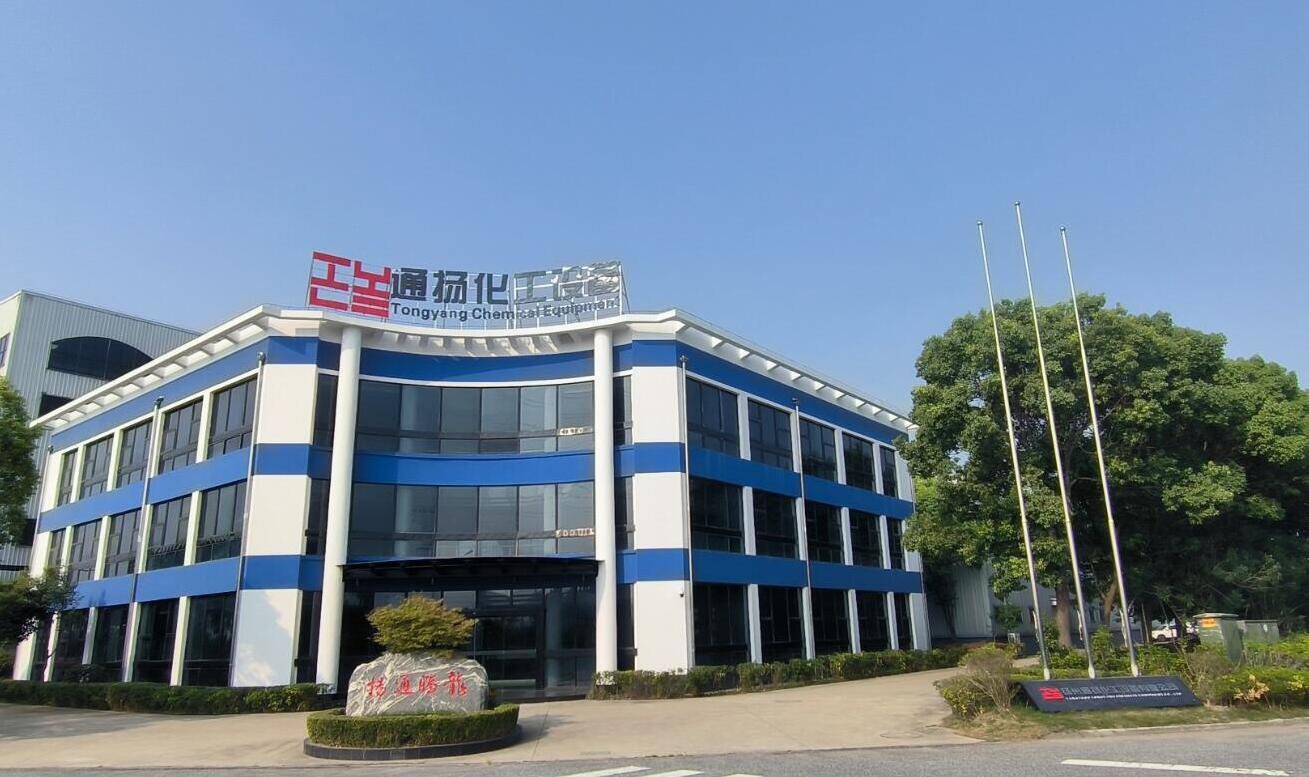
Provide turnkey projects
Our team can provide you with turnkey engineering, you do not have to worry about the installation is not professional, we will complete the installation and debugging according to your specific requirements, at the same time, a professional training, to solve your worries.
Competitive Advantage
Abundant experience: more than 30 years experience in non-ferrous metal cladding and production;
Technical consulting service: technical consulting on material, welding, NDE, Welding, Heat treatment ;
Independent inspection service; in-process inspection, final inspection; Hydrostatic testing etc;
Transportation: have own export license, Yangzhou Port and Shanghai Port , 2.4 kilometers away from Yangzhou Port and 226 kilometers away from Shanghai Port.
Varieties of manufacturing standards to meet the needs of the global market
GB150-2011;
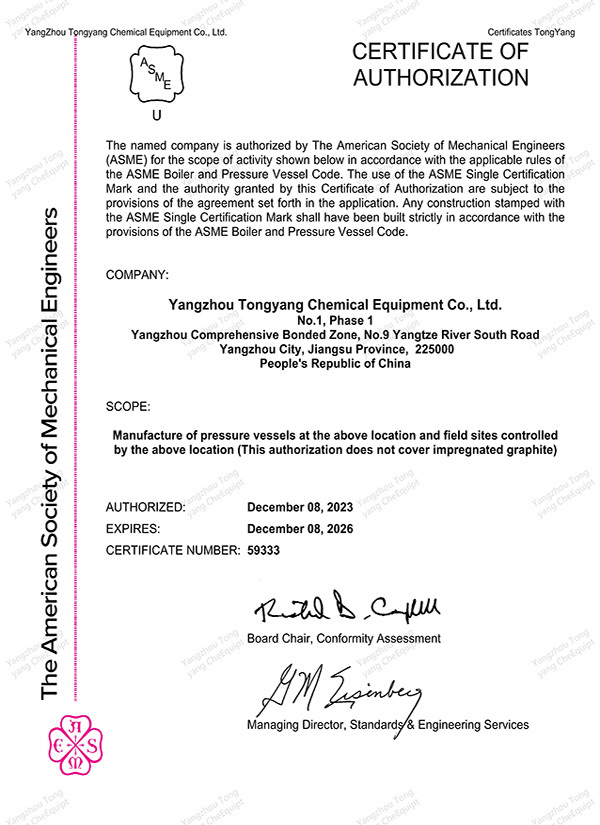
ASME U, U2 Certificate;
GOST 34347;
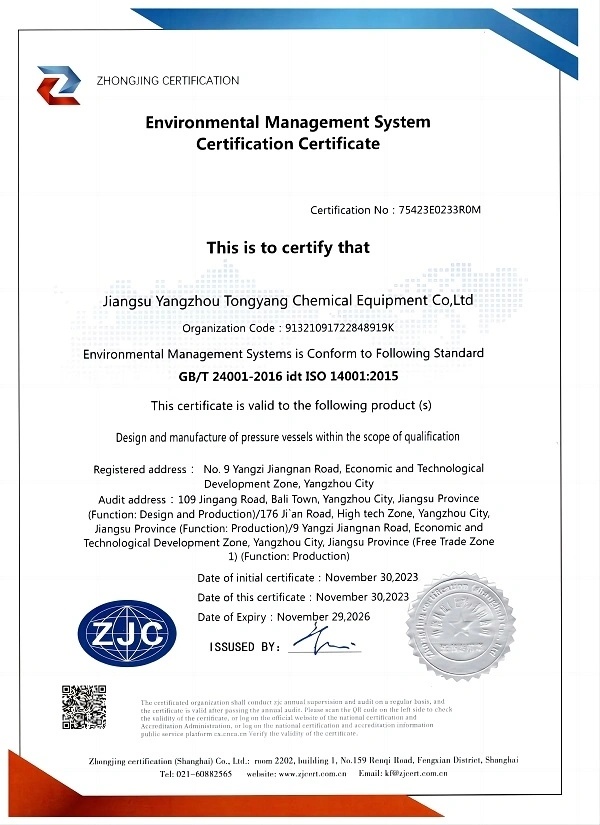
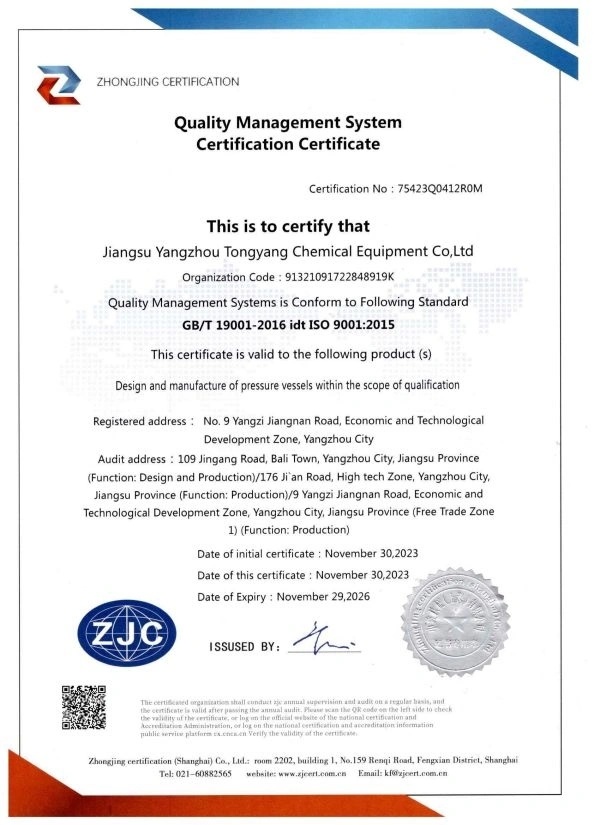
ISO14001 , ISO 45001, ISO 9001;
ASME SEC VIII DIV.1,ASME SEC VIII DIV.2 ; f.PED 97/23/EC with CE certificate;
Workshop Photos

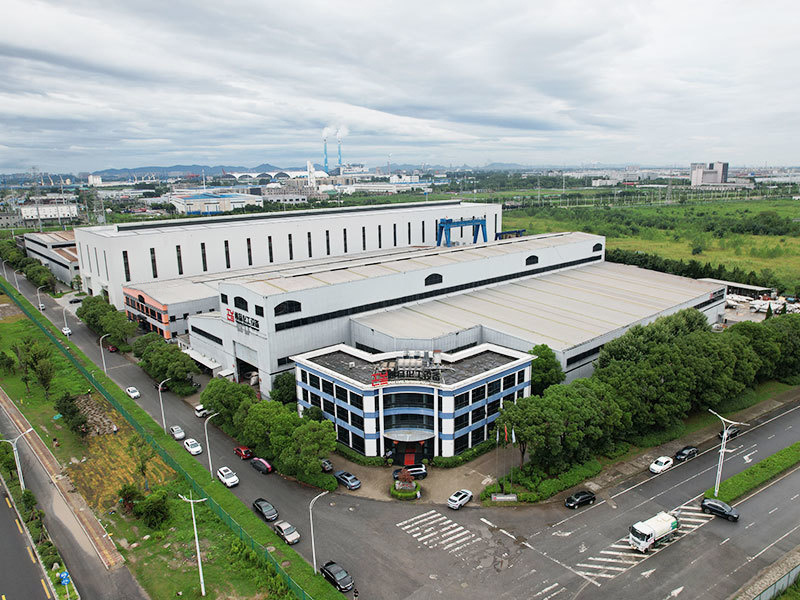
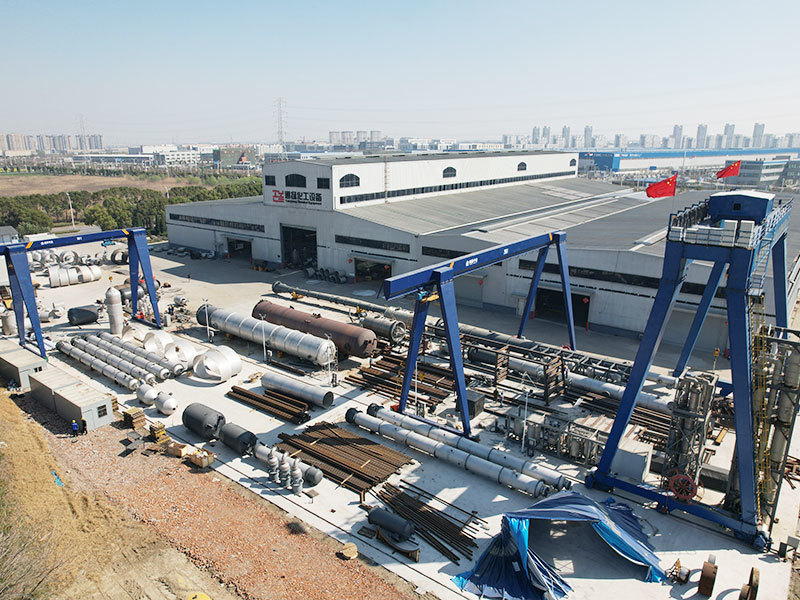
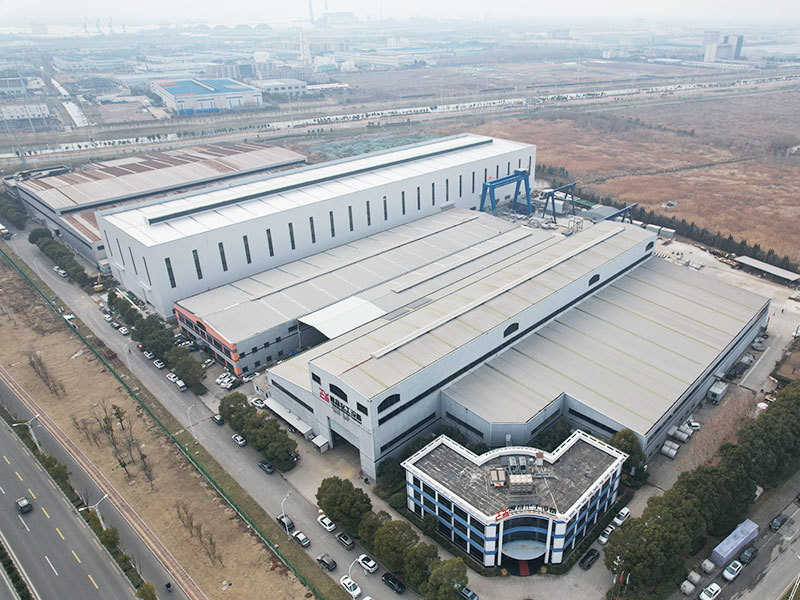
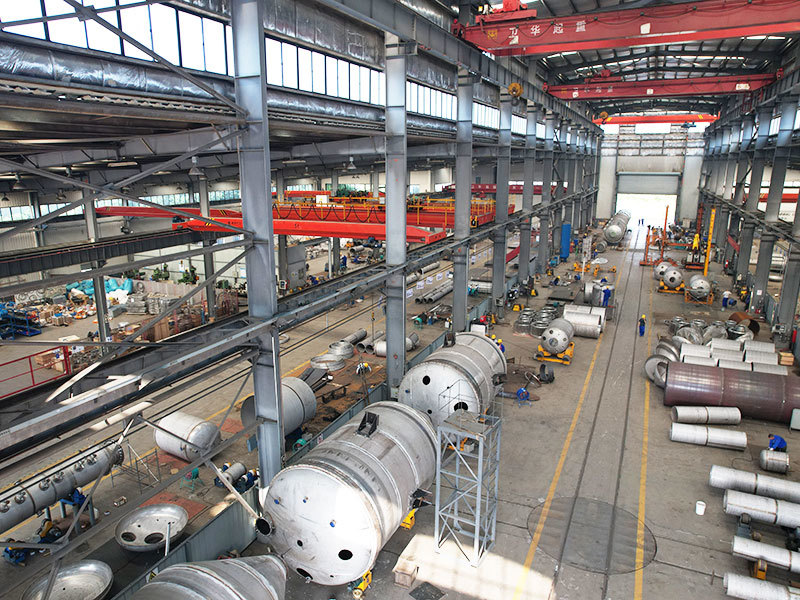
Production workshop
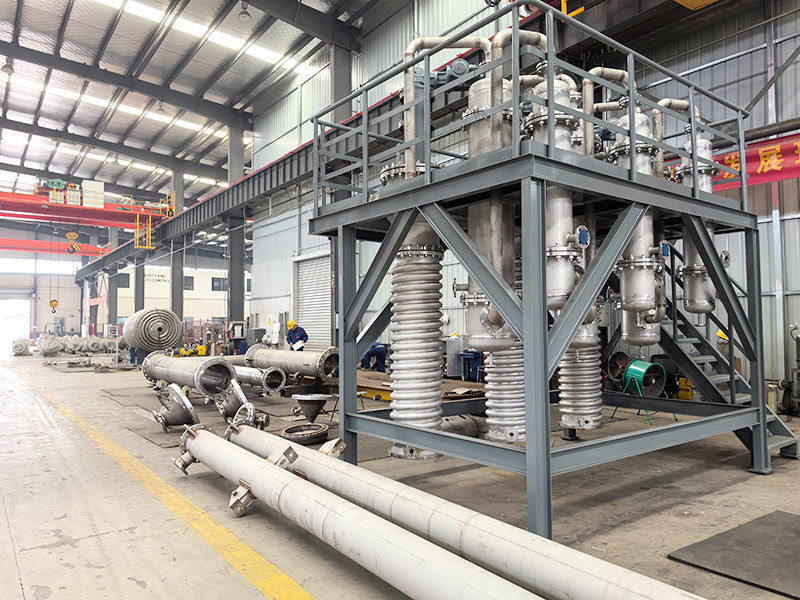
Production workshop
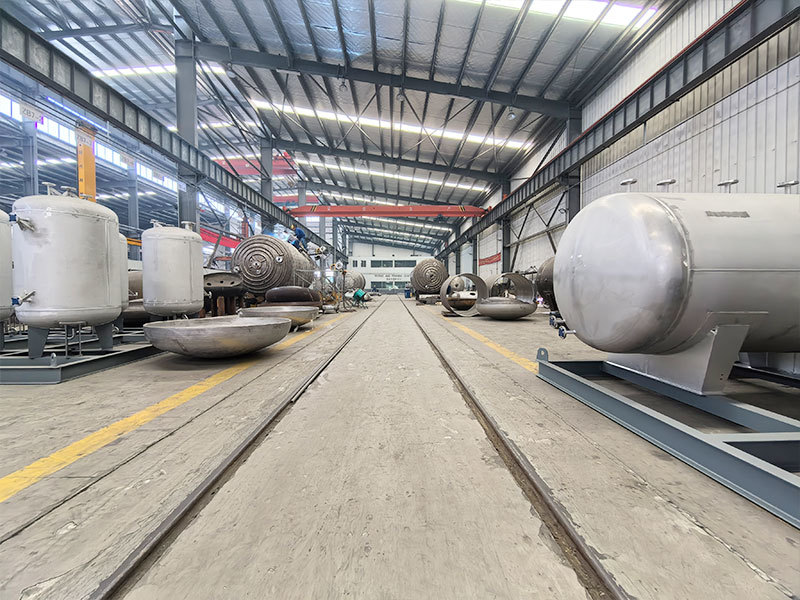
Production workshop
Production Certification
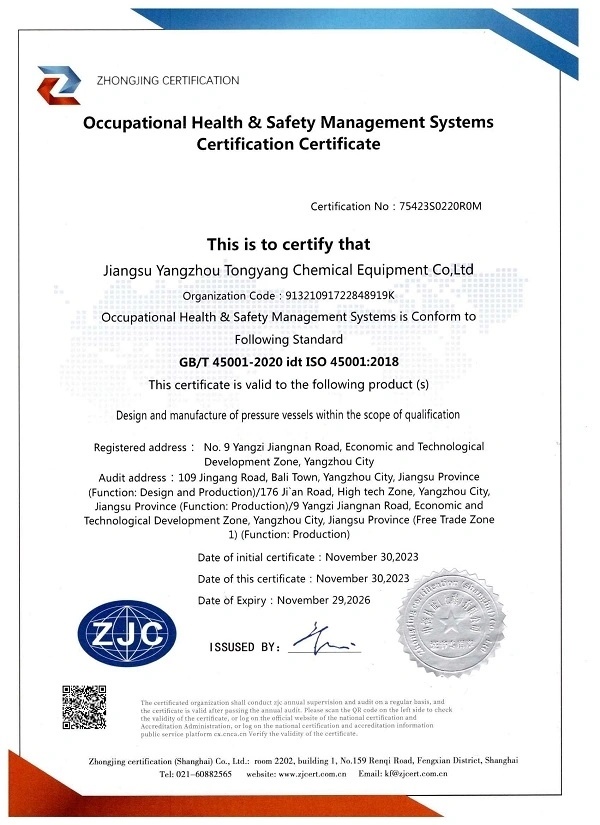


Consultation
Address
No. 9 Yangtes south Road (No. 1 Bonded Zone), Yangzhou, Jiangsu China


Copyright©2023 Yangzhou Tongyang Chemical Equipment Co., Ltd.